
Elegant Pea & Mint Risotto
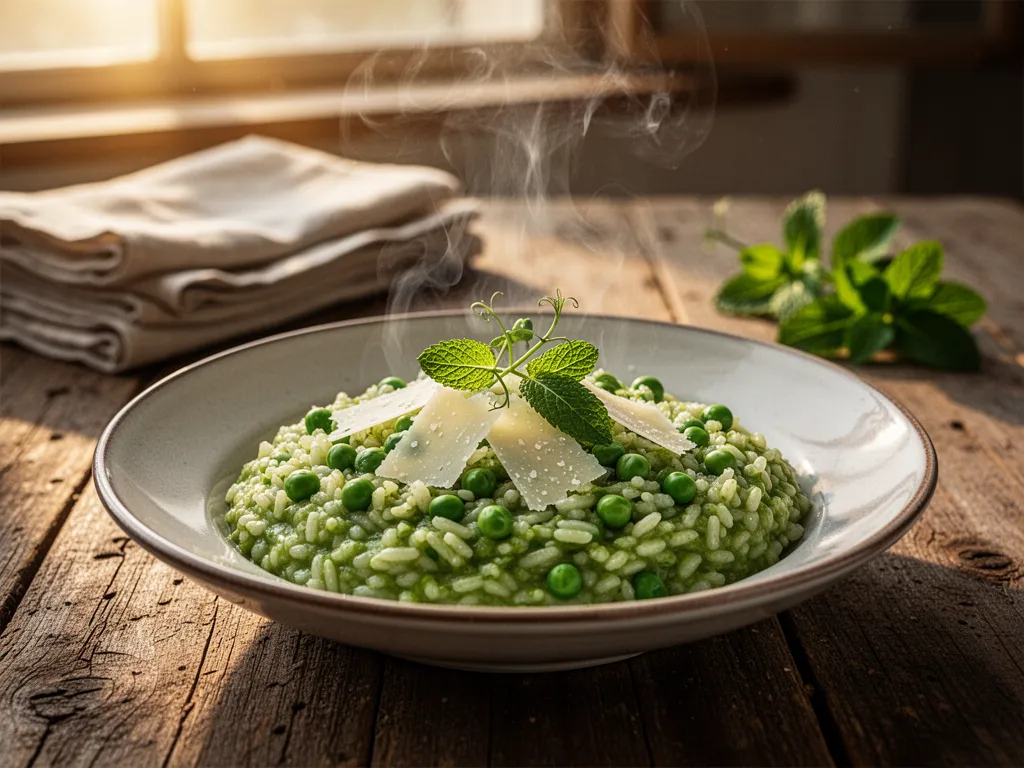
Elegant Pea & Mint Risotto
The gentle pop of sweet peas against creamy, al dente rice. The bright whisper of fresh mint dancing through each luxurious spoonful. That's the magic of this Pea & Mint Risotto – a dish that transforms humble ingredients into pure Italian elegance. As someone who's spent countless evenings perfecting the art of risotto-making, I can tell you that this combination strikes a perfect balance between sophistication and comfort.
On my first trip to Venice years ago, I fell head-over-heels for the way local chefs treated risotto with such reverence. They taught me that creating the perfect risotto isn't about following rigid rules – it's about developing an intuition for when the rice needs more broth, how vigorously to stir, and precisely when to add those finishing touches. This recipe captures that same spirit, bringing restaurant-worthy results right to your home kitchen. While traditional risotto can seem intimidating, I've streamlined the process without sacrificing an ounce of flavor or that signature creamy texture.
The beauty of this dish lies in its versatility. Serve it as a stunning vegetarian main course, where the sweet pops of peas and aromatic mint take center stage, or present it as a sophisticated side dish alongside grilled fish or roasted chicken. I love preparing this in my favorite enameled Dutch oven, which maintains steady heat and gives me plenty of room to stir and develop that crucial starchy creaminess.
Why This Works
The marriage of peas and mint is a classic pairing that goes beyond mere tradition. The natural sweetness of fresh (or frozen) peas finds its perfect complement in the cooling, aromatic notes of fresh mint leaves. As these ingredients meld into the creamy rice, they create layers of flavor that unfold with each bite. The starch from proper Arborio or Carnaroli rice creates that signature silky texture that makes risotto so irresistible, while small doses of hot broth added gradually ensure each grain cooks to perfect tenderness while maintaining its structure.
What elevates this version above others is the timing of adding the peas and mint. By incorporating the peas in the final minutes of cooking, they retain their vibrant color and sweet pop, rather than dissolving into mush. The mint leaves are added in two stages – some during cooking for depth of flavor, and a fresh scatter just before serving for brightness. A final mantecatura – that crucial step of vigorously stirring in cold butter and Parmigiano-Reggiano – creates the signature wave-like flow that marks a perfectly executed risotto.
Ingredient Spotlight
The key to extraordinary risotto lies in selecting the right ingredients. For the rice, seek out high-quality Italian Carnaroli if you can find it – it's often called the "king of rices" for good reason. Its higher starch content and firmer texture make it more forgiving than Arborio while producing an even creamier result. When it comes to peas, fresh spring peas are unbeatable, but don't hesitate to use frozen petit pois – they're flash-frozen at peak ripeness and often sweeter than out-of-season fresh ones. Look for bright green, unblemished pods if using fresh, and avoid any that are yellowed or have visible blemishes.
For the mint, appearance matters tremendously. Select leaves that are bright green, crisp, and deeply aromatic when gently rubbed. Avoid any with dark spots or wilting edges. I prefer peppermint over spearmint for this dish – it has a cleaner, more focused flavor that complements the peas without overwhelming them. The Parmigiano-Reggiano should be freshly grated from a chunk with visible crystallization, never pre-grated. Look for the official pin-dot marking on the rind to ensure you're getting the real deal, aged at least 24 months for optimal flavor and texture.
Ingredients You'll Need
- 2 cups Carnaroli rice (or Arborio as substitute)
- 6-7 cups high-quality vegetable or chicken broth, kept warm
- 2 cups fresh or frozen petit pois peas
- 1 cup freshly grated Parmigiano-Reggiano (24-month aged)
- 1 medium yellow onion, finely diced
- 1/2 cup dry white wine (like Pinot Grigio)
- 3 tablespoons unsalted butter, divided
- 2 tablespoons extra virgin olive oil
- 1 bunch fresh peppermint leaves (about 20-25 leaves)
- Sea salt and freshly ground black pepper
Essential Equipment
A heavy-bottomed Dutch oven is crucial for achieving even heat distribution and preventing hot spots that could lead to uneven cooking. You'll need a wooden spoon for the constant stirring – metal can damage the rice grains and affect texture. Keep a ladle nearby for adding broth gradually, and a microplane grater for the Parmigiano-Reggiano. A separate saucepan is essential for keeping your broth warm throughout the cooking process, as adding cold liquid would interrupt the crucial starch-releasing process.
Step-by-Step Instructions
Step 1: Preparation
Begin by setting your mise en place with military precision. Heat your broth in a separate saucepan until it's gently steaming – you'll hear the quietest of simmers. The temperature should be hot enough that when you hold your hand above it, you feel consistent warmth rising. While the broth heats, finely dice your onion into uniform pieces no larger than a petit pois – consistency is key for even cooking.
Carefully pick through your mint leaves, selecting only the most pristine specimens. Tear half of them into small pieces for cooking, reserving the most beautiful whole leaves for the final garnish. The moment you tear the mint, its volatile oils will release an intoxicating aroma that should fill your kitchen with a fresh, cooling scent. If using frozen peas, don't thaw them – they'll cook perfectly from frozen and maintain better texture.
Step 2: Building the Base
Place your Dutch oven over medium heat and add the olive oil and one tablespoon of butter. As they meld together, you'll notice the butter's nutty aroma beginning to emerge. Add your diced onions and watch them dance – they should sizzle gently, not aggressively. Cook until they become translucent and tender, about 5-7 minutes, stirring occasionally. You'll know they're ready when they're soft enough to squish easily against the side of the pot.
Add your Carnaroli rice to the pot, stirring constantly to coat each grain with the oil-butter mixture. Listen for a subtle clicking sound as the rice grains tap against each other – this is the sound of proper toasting. Continue stirring for 2-3 minutes until the edges of the rice grains become slightly translucent while the centers remain pearly white. Add the wine and inhale deeply as the alcohol burns off, releasing an aromatic cloud that signals the real cooking is about to begin.
Step 3: The Crucial Cook
Now begins the meditative process of gradually adding hot broth, one ladleful at a time. Each addition should be just enough to barely cover the rice, creating a gentle bubbling that sounds like a whispered conversation. Stir constantly but gently – you're encouraging the rice to release its starches, not punishing it. The liquid should be absorbed and the rice should pull away slightly from the bottom of the pot before adding the next ladleful.
After about 15 minutes of this rhythmic addition and stirring, taste a grain of rice. It should be starting to soften but still have significant resistance. This is when you'll add your torn mint leaves and continue the process. When the rice is nearly al dente (about 18 minutes total), add the peas and stir them through. The peas will release their sweet aroma and turn a vibrant green as they warm in the creamy rice, creating a beautiful contrast of colors and textures.
Substitutions & Variations
For a luxurious twist, try stirring in mascarpone instead of butter at the final stage – it adds an impossibly silky texture and subtle sweetness that elevates the dish further. Vegetarians might appreciate substituting the Parmigiano-Reggiano with aged pecorino for a sharper, more complex flavor profile. For a springtime variation, incorporate blanched asparagus tips alongside the peas, creating a verdant celebration of the season. Those seeking a dairy-free option can use a high-quality olive oil for finishing and nutritional yeast for that coveted umami note.
Chef-Level Pro Tips
- Reserve some of the starchy cooking liquid from the peas (if using fresh) to add back into the risotto – it enhances the natural sweetness and contributes to the overall creaminess.
- Toast the rice grains until you hear a subtle crackling sound and can smell a nutty aroma – this creates a protective barrier that prevents the grains from releasing their starch too quickly.
- When adding the Parmigiano-Reggiano, remove the pot from heat first and let it rest for 30 seconds. This prevents the cheese from becoming stringy and ensures proper incorporation.
- For the perfect all'onda consistency (wave-like movement), give the finished risotto one final vigorous stir while adding a last splash of hot broth.
Troubleshooting: Common Mistakes to Avoid
The most frequent pitfall is rushing the cooking process by adding too much broth at once. This prevents the rice from releasing its starches gradually and results in a soupy, rather than creamy, consistency. If you find yourself in this situation, increase the heat slightly and stir more vigorously to encourage starch release. Continue cooking until the excess liquid reduces and the proper texture develops.
Another common issue is under-seasoning throughout the cooking process. Risotto requires adequate salt at multiple stages to develop its full flavor potential. If your finished dish tastes flat, don't try to correct it all at once with a heavy hand of salt at the end. Instead, learn from this and remember to season your broth well and taste-test throughout the cooking process next time.
Storage and Reheating
Store any leftover risotto in an airtight container in the refrigerator for up to two days. To reheat, add a generous splash of hot broth or water and warm gently over medium-low heat, stirring frequently. You may need to add extra liquid as the rice will have continued to absorb moisture while stored. Finish with a fresh grating of Parmigiano-Reggiano and a few new mint leaves to revive the flavors.
The Bottom Line
This Elegant Pea & Mint Risotto represents the perfect marriage of technique and ingredients. When executed properly, it showcases the versatility of simple ingredients transformed through careful attention and patience. The bright sweetness of the peas, the cooling fresh mint, and the creamy embrace of perfectly cooked rice create a dish that's both comforting and sophisticated.
Remember that great risotto is as much about the journey as the destination. Take pleasure in the meditative stirring, the gradual transformation of humble ingredients, and the way the dish comes together in its final moments. This is more than just dinner – it's a celebration of traditional technique meeting modern refinement.
Frequently Asked Questions
Can I make this risotto ahead of time for a dinner party?
While risotto is best served immediately, you can par-cook it up to 75% of the way through. Stop cooking while the rice is still quite al dente, spread it on a baking sheet to cool, and refrigerate. Twenty minutes before serving, resume cooking with hot broth until creamy and perfectly done.
Why is my risotto taking longer than 20 minutes to cook?
Several factors can extend cooking time: insufficient heat, cold broth, or older rice. Ensure your broth is hot, maintain a gentle simmer, and use fresh, high-quality rice. Also, higher altitudes may require slightly longer cooking times.
What's the best way to prevent the mint from turning black?
Add torn mint leaves in two stages: some during cooking and fresh ones at the very end. For garnishing, tear the leaves just before serving and gently press them into the hot risotto rather than stirring them in, which can cause bruising and discoloration.
Can I freeze leftover risotto?
While possible, freezing isn't recommended as it can significantly alter the texture. If you must freeze it, store in an airtight container for up to 1 month. Thaw overnight in the refrigerator and reheat gradually with additional hot broth, stirring constantly to revive the creamy texture.


